

Learn how to master your time with practical strategies that increase productivity, reduce stress, and help you achieve more every day.
Introduction
Everyone gets the same twenty-four hours in a day, yet some people seem to build successful businesses, stay healthy, enjoy family time, and still remain calm. Others feel trapped in endless tasks, unfinished goals, stress, and exhaustion. The difference is rarely talent or luck. The difference is knowing how to master your time.
If you often feel like the day disappears before you complete anything important, you are not lazy. You are likely using a system that was never designed to help you succeed. Most people are reacting to life instead of leading it. They wake up, check messages, answer demands, rush through the day, and go to sleep feeling behind. Then they repeat the same cycle tomorrow.
The good news is that time mastery is a skill, not a gift. Anyone can learn how to master your time with the right principles, habits, and structure. Once you understand how time really works, you can become more productive, less stressed, and more in control of your future.
This guide will show you exactly how to do that in a realistic way that works even if you are busy, distracted, or starting from zero.

Why Most People Never Master Their Time
Many people believe they have a time problem, but what they really have is a priority problem. Time cannot be managed in the traditional sense because it keeps moving whether you are ready or not. What can be managed is attention, energy, focus, and choices.
Most people fill their days with urgent but unimportant tasks. They answer notifications immediately, attend unnecessary meetings, say yes to everything, and allow distractions to steal the best hours of the day. Then they wonder why their goals remain unfinished.
The truth about how to master your time is that successful people do not do everything. They do the right things first.
Imagine two people working eight hours. One person spends the day switching between apps, emails, and random tasks. The second person spends three focused hours on meaningful work and uses the remaining time wisely. The second person often gets better results with less stress.
That is because productivity is not about being busy. It is about being intentional.
The Hidden Cost of Poor Time Management
When you fail to control your time, the cost goes far beyond unfinished tasks. It affects your confidence, finances, relationships, health, and long-term dreams.
Lost time becomes lost opportunities. That business idea never starts. That exam preparation gets delayed. That exercise routine never happens. That side income stays a dream.
Poor time habits also create emotional stress. Constant lateness, rushing, and missed deadlines make people feel guilty and overwhelmed. Over time, this lowers self-belief.
According to studies shared by organizations like American Psychological Association, chronic stress can negatively affect mental and physical health. Much of that stress comes from feeling out of control.
Learning how to master your time is not only about getting more done. It is about protecting your peace, future, and potential.
How to Master Your Time With a New Mindset
Before using planners or productivity apps, you need a better mindset. If your thinking stays the same, your schedule will too.
The first shift is understanding that every yes is also a no. When you say yes to distractions, you say no to goals. When you say yes to procrastination, you say no to progress. When you say yes to wasting evenings, you say no to future success.
The second shift is accepting that perfection wastes time. Many people delay starting because conditions are not ideal. They want the perfect plan, perfect mood, or perfect moment. But progress beats perfection every time.
The third shift is seeing time as money. If someone gave you $24 daily and removed what you did not use by midnight, you would spend it wisely. That is exactly how hours work.
When you respect time, you begin to protect it.
Practical Systems That Actually Work
If you truly want to know how to master your time, use systems instead of motivation. Motivation changes daily. Systems keep working.
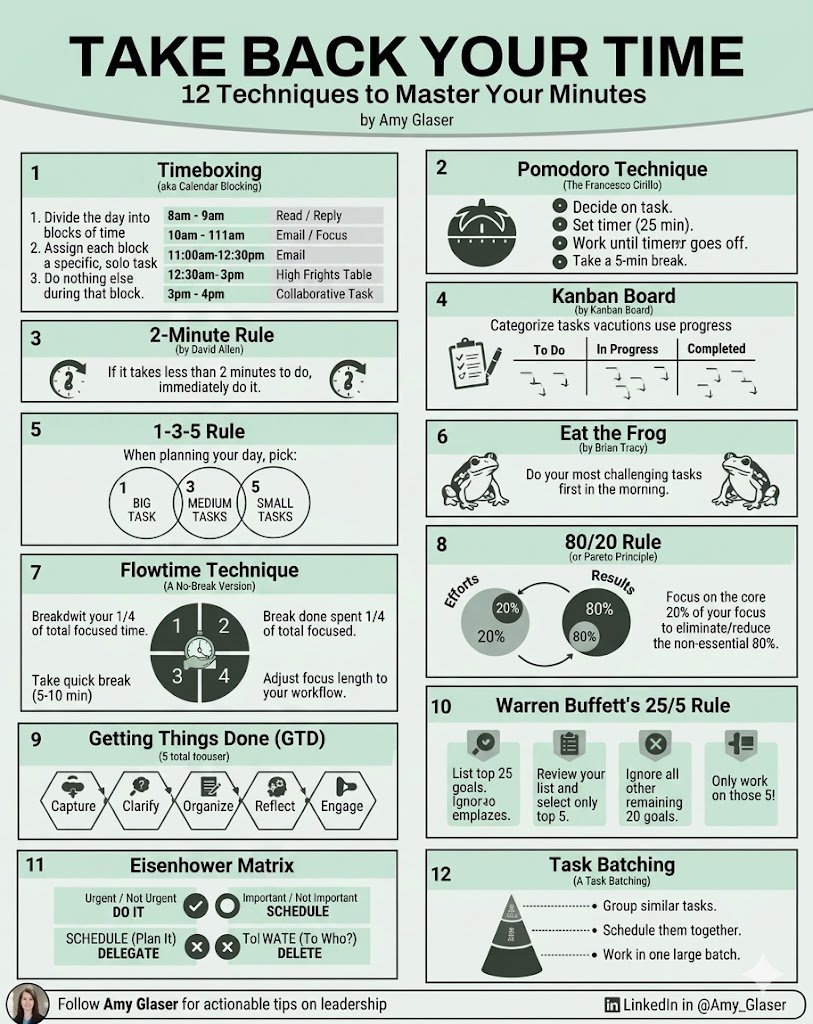
Start with the Rule of Three. Every morning, identify the three most important tasks that would make the day successful. Complete those before lower-value tasks. This creates momentum and prevents scattered effort.
Use time blocking. Assign specific hours for specific activities. For example, 7 AM to 8 AM exercise, 9 AM to 11 AM deep work, 1 PM to 2 PM calls, 7 PM reading. This removes decision fatigue and helps you stay focused.
Try the Pomodoro technique. Work for 25 minutes with full focus, then take a 5-minute break. After four rounds, take a longer break. This is powerful for students and people who struggle with concentration.
Use a shutdown routine each evening. Spend ten minutes planning tomorrow, clearing your desk, and closing unfinished loops. This improves sleep and helps you start strong the next day.
The secret of how to master your time is repetition. Small systems practiced daily beat complicated plans abandoned weekly.
Daily Habits of Highly Productive People
Successful people often look extraordinary, but their routines are surprisingly ordinary. They simply repeat effective habits.
They start mornings intentionally instead of reacting immediately to phones. Many use the first hour for exercise, prayer, reading, planning, or focused work.
They protect high-energy hours. If they think best in the morning, they schedule important tasks early. If creative at night, they plan accordingly.
They batch similar tasks together. Instead of checking email all day, they check it at set times. Instead of making random calls, they group them into one session.
They leave margin in schedules. Overpacked calendars create stress. Smart people allow buffer time for delays and surprises.
They review weekly. Every Sunday or end of week, they ask what worked, what wasted time, and what needs adjustment.
These habits are not glamorous, but they are how to master your time in real life.

Tools That Help You Save Time
While mindset matters most, the right tools can help. A simple notebook is enough for many people, but digital tools can add speed.
Use calendar apps to schedule priorities, not just appointments. Use task managers like Todoist or Trello for organizing projects. Use focus apps that block distracting websites during work sessions.
If you handle business work, automation tools can save hours weekly by scheduling emails, reminders, or repetitive admin tasks.
But remember this important truth: tools do not create discipline. They support discipline. Many people buy apps instead of building habits.
Use tools simply. Complexity often becomes another distraction.
Social Proof and Real Results
History shows the power of disciplined time use. Benjamin Franklin famously structured his days carefully and asked himself daily questions about purpose and achievement.
Modern entrepreneurs often credit calendar discipline and focused routines for their success. Productivity research from McKinsey & Company and other organizations repeatedly shows that prioritization and uninterrupted focus improve output dramatically.
Everyday people experience this too. Students who begin planning study sessions often improve grades. Workers who reduce distractions often finish earlier. Parents who create routines often feel calmer and more present.
You do not need to be famous for these strategies to work. You only need consistency.
Why Mastering Time Changes Your Future
When you learn how to master your time, you do more than complete tasks—you shape the direction of your life. Every hour used wisely becomes progress toward your goals, whether that means building a career, improving health, growing income, or strengthening relationships. People often underestimate how small daily actions create massive long-term results. One focused hour of learning each day can become expert-level knowledge in a few years. One hour of exercise daily can transform health. One hour building a business can change finances. Time is the foundation of success, and mastering it means mastering your future.
Strong Calls to Action
If your days currently feel chaotic, do not wait for Monday or next month. Start tonight by writing tomorrow’s top three priorities.
If distractions are stealing your future, remove one major distraction today and protect one focused hour.
If stress keeps growing, build a simple weekly plan now and regain control before another month disappears.
The best time to learn how to master your time is before more valuable days are wasted.
FAQ About How to Master Your Time
What is the first step in how to master your time?
The first step is identifying priorities. If everything feels important, nothing gets done well.
How long does it take to master your time?
Most people notice improvements within one to two weeks of using consistent systems.
Can students learn how to master your time?
Yes. Students benefit greatly from schedules, focused study blocks, and daily planning.
What is the biggest mistake people make?
Trying to do too much at once and failing to prioritize meaningful tasks.
Do I need expensive tools?
No. A notebook and calendar are enough to begin mastering time.

Why does time mastery reduce stress?
Because planning creates control, clarity, and fewer last-minute emergencies.How Clean Email Helps You Master Your Time
One of the biggest time-wasters today is email clutter. Many people open their inbox intending to reply to one message, then lose thirty minutes sorting spam, deleting newsletters, and searching for important conversations. This is where Clean Email becomes powerful. It is designed to help users bulk delete unwanted emails, unsubscribe from mailing lists, organize messages into smart folders, and automate inbox cleanup rules. Instead of manually handling hundreds or thousands of emails, Clean Email groups messages so you can clear them in minutes rather than hours. (Clean Email)
If you are learning how to master your time, protecting your attention is essential. A messy inbox creates distractions all day. Clean Email can automatically archive old messages, pause subscriptions, block unwanted senders, and sort new mail so only what matters reaches your main inbox. That means less stress, faster response times, and more focus for work, study, or personal goals. (Clean Email)
Think about it this way: saving just 20 minutes per day from email chaos equals over 120 hours a year. That is five full days you could invest into learning, business, family, or health. Time mastery is often about removing small daily leaks, and email overload is one of the biggest leaks modern people face.
👉 If you want a cleaner inbox and more productive days, try Clean Email
Final Conclusion
Your life is shaped by how you spend your hours. Days become weeks, weeks become years, and years become your future. If you continue letting distractions, poor habits, and random demands control your schedule, you will likely stay frustrated and behind.
But if you decide today to learn how to master your time, everything can begin to change. You can become calmer, more productive, healthier, and more successful without working endlessly.
Start small. Choose your top three priorities. Schedule focused time. Protect your energy. Review your progress weekly.
Time mastery is not built in one dramatic moment. It is built in daily choices.
Take control now, because the clock keeps moving whether you lead it or not.
[Earnixor]

Men’s pants, baggy sweatpants, fleece pants, season 8, solid color fleece sweatpants